
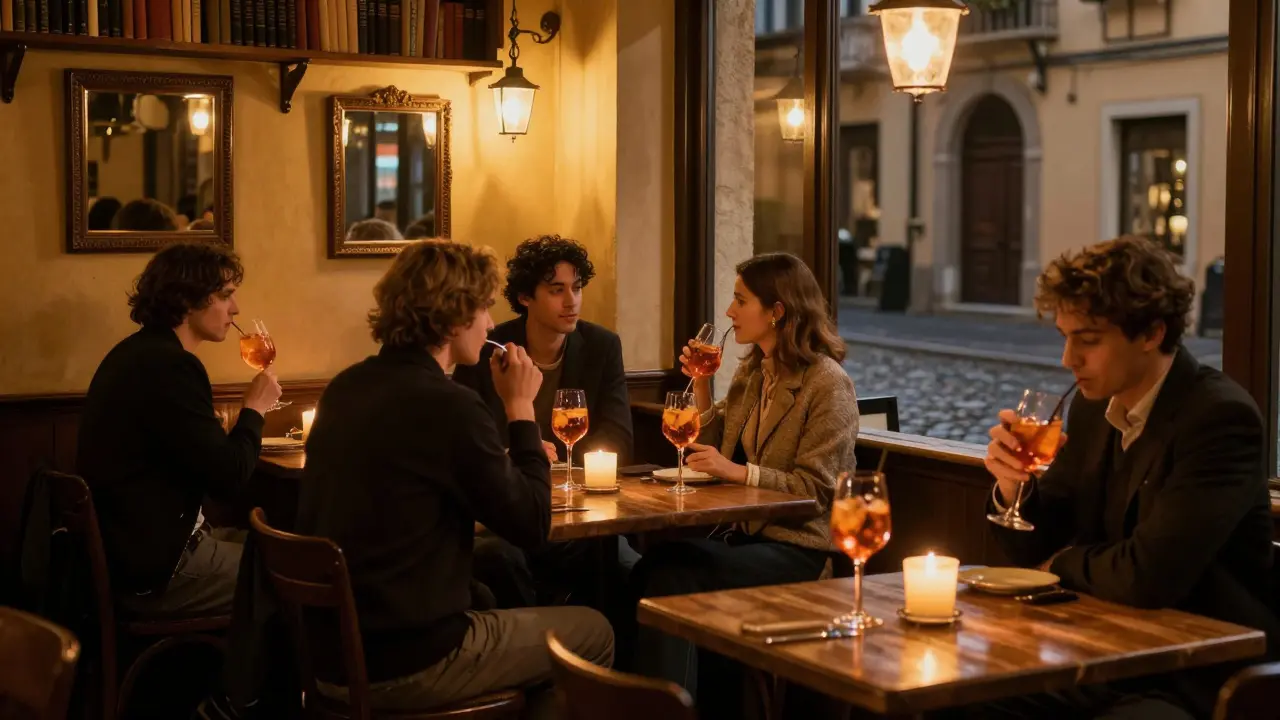
Milan doesn’t sleep when the sun goes down. While most visitors think of fashion shows and designer boutiques, the real pulse of the city beats after 10 p.m. You won’t find neon-lit strip clubs or tourist traps here. Instead, you’ll get hidden speakeasies, rooftop lounges with skyline views, and local joints where the wine flows like water and the music doesn’t start until midnight. This isn’t just partying-it’s a cultural experience.
Start Early, Stay Late
The Milanese don’t rush. Dinner at 9 p.m. is normal. By 11 p.m., people are just getting warmed up. If you show up at a bar at 9:30 p.m., you’ll be one of the first. That’s your advantage. Get in early, claim a good spot, and watch the crowd shift from dinner guests to night owls. The best spots fill up fast after midnight, especially in Brera and Navigli.
Try Brera as your starting point. It’s narrow streets lined with candlelit wine bars like Caffè della Brera and Bar Basso, where the Aperol Spritz was invented. Order one. Sip slowly. Watch the locals do the same. This is how you blend in.
Know the Neighborhoods
Not all of Milan’s nightlife is the same. Each district has its own rhythm.
- Brera: Romantic, artsy, quiet. Perfect for cocktails and jazz. Best for ages 25+
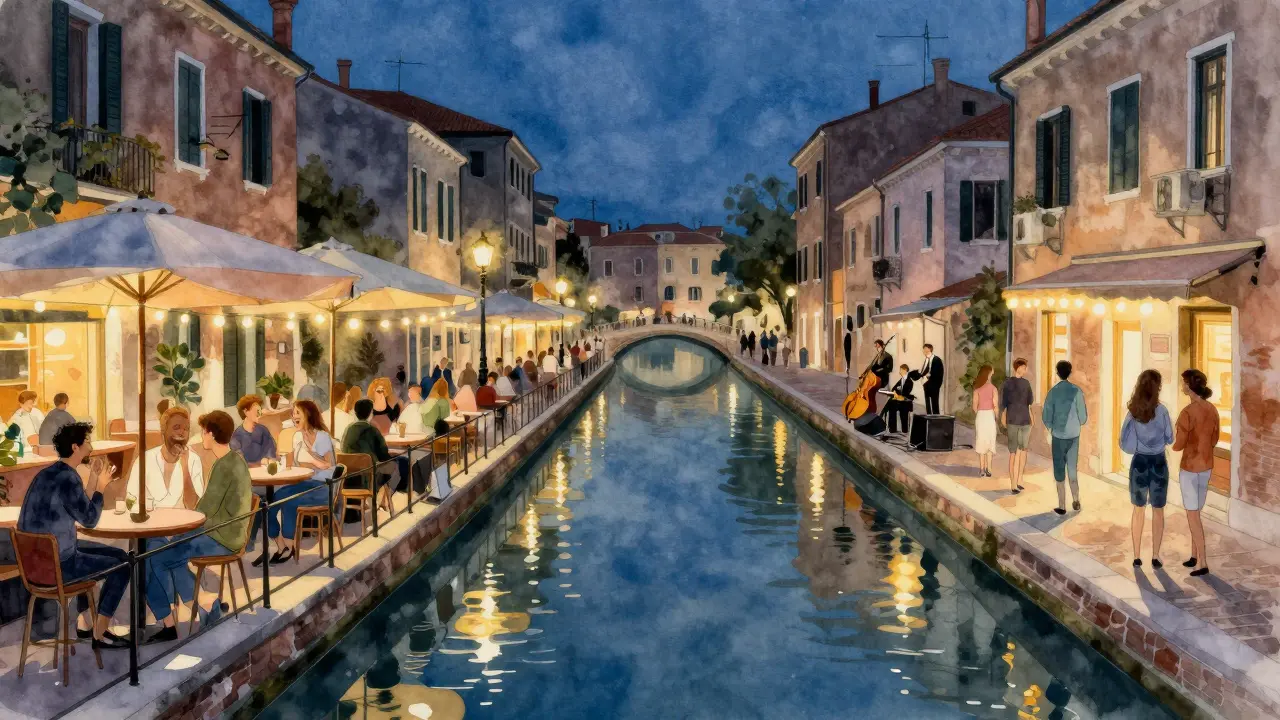
- Navigli: Canalside bars, outdoor seating, live music. Open until 3 a.m. on weekends. The place where students and creatives hang out
- Porta Ticinese: Edgy, alternative, loud. Think indie bands, craft beer, and graffiti walls. If you want to dance till sunrise, this is it
- Corso Como: Upscale, exclusive. Clubs here require dress codes and often have guest lists. It’s where Milan’s elite unwind after dinner
- Zone 1: The heart of the city. Mix of trendy lounges and underground clubs. Great for hopping between spots
Don’t try to do all of them in one night. Pick one neighborhood and go deep. You’ll have a better experience than rushing across town.
Clubbing? Skip the Brochure Names
Most travel blogs name the same three clubs: Bocconi, Liquirizia, and Armani/Silos after-hours parties. But here’s the truth: locals rarely go to those anymore. They’ve become too crowded, too expensive, and too predictable.
Instead, look for places like Alcatraz-a converted factory in the south side with industrial beats and no dress code. Or Teatro del Silenzio, a secret venue hidden behind a bookshop in Brera. You need a password. Ask a bartender. They’ll give it to you if you look like you belong.
Weekends are the real test. Friday and Saturday nights are packed. But Wednesday and Thursday? That’s when the real insiders come out. Fewer crowds, better music, cheaper drinks.
Drink Like a Local
You don’t need to order a mojito or a vodka soda. Milanese nightlife runs on three drinks:
- Aperol Spritz: The official starter. Sweet, bubbly, served with an orange slice. Don’t ask for it on the rocks.
- Campari Soda: Bitter, bold, perfect for those who like their drinks unapologetic.
- Wine by the glass: Especially Lombardia reds like Nebbiolo or Barbera. Bars pour 125ml portions. Order two. You’ll get the flavor without the hangover.
Avoid tourist menus with 50 cocktail options. Stick to the house specialties. They’re cheaper, better made, and you’ll look like you know what you’re doing.
What to Wear
Milan is fashion-forward, but not in the way you think. You don’t need a Gucci suit. You need to look put together.
Men: Dark jeans, clean sneakers or loafers, a fitted shirt or sweater. No hoodies. No shorts. No flip-flops.
Women: A little black dress, tailored trousers, or a stylish jumpsuit. Heels aren’t required, but flat shoes should look intentional-not like you walked all day.
At Corso Como or Armani lounges, they’ll check your outfit. At Porta Ticinese, they’ll barely glance. Dress for the place, not the Instagram post.
Get Around Smart
Public transport shuts down at 1:30 a.m. After that, you’re on your own.
Use Bolt or Free Now apps. They’re cheaper than taxis and easier to track. Avoid hailing cabs on the street-they’ll charge you double after midnight.
If you’re staying in the city center, walking is fine until 1 a.m. But after that, stick to well-lit streets. Navigli is safe, but back alleys near the canals get quiet. Don’t wander alone after 2 a.m.
Don’t Fall for the Scams
There are three common tricks:
- The "free" drink offer: Someone hands you a glass, says "on the house," then demands €30 when you finish it. Say no thanks. Walk away.
- The "VIP entrance" scam: A guy in a suit says he can get you into Liquirizia for €50. It’s fake. Buy tickets online if you want in.
- The "photo with a model": A woman asks you to take a picture with her. Then her friend shows up with a bill for €100. It’s a setup. Don’t engage.
If something feels off, it probably is. Trust your gut. Milanese people are friendly. The scammers are the ones pushing too hard.
When to Go
Season matters.
Summer (June-August): Navigli explodes. Outdoor bars stay open until 4 a.m. The air is warm, the canals glow with string lights. This is peak season.
Winter (November-February): Indoor spots thrive. Cozy wine bars, jazz lounges, and hidden cocktail dens become the stars. December brings Christmas markets and mulled wine bars near Piazza del Duomo.
March and October: The sweet spot. Fewer tourists, perfect weather, lively crowds. If you can plan around these months, you’ll get the best of everything.
Final Tip: Be Present
The best nights in Milan aren’t the ones you post about. They’re the ones you remember quietly-the laughter over a shared bottle of wine, the surprise jazz set in a back room, the way the city lights reflect on the canal after midnight.
You don’t need to dance. You don’t need to be seen. You just need to be there. Listen. Look. Taste. Let the rhythm of the city pull you in.
What time do Milan clubs actually open?
Most clubs don’t really get going until midnight. Some open at 11 p.m., but the real energy starts around 1 a.m. If you show up at 10 p.m., you’ll be alone. Wait until after dinner-Milan moves on its own schedule.
Is Milan nightlife safe for solo travelers?
Yes, but with awareness. Central areas like Brera, Navigli, and Porta Ticinese are well-lit and busy. Avoid isolated alleys after 2 a.m. Use ride apps instead of walking long distances late at night. Most locals are friendly and will help if you’re lost.
Do I need to make reservations for bars or clubs?
For casual bars, no. For popular clubs like Armani/Silos or Alcatraz, yes. Check their Instagram or website the day before. Some require guest lists. Others let you walk in. When in doubt, arrive early.
Are there any age restrictions in Milan nightlife?
Most bars allow 18+. Clubs usually require 21+. ID is checked regularly, especially in upscale areas. Bring your passport-it’s the most reliable form of ID for tourists.
What’s the average cost of a night out in Milan?
You can have a great night for €40-€60. Aperol Spritz: €8-€12. Cocktail: €12-€18. Club entry: €10-€20 (often includes one drink). Dinner adds another €25-€40. Skip the tourist traps and stick to local spots-you’ll save money and get better experiences.
Can I find English-speaking staff in Milan nightlife spots?
In tourist-heavy areas like Brera and Corso Como, yes. In local hangouts in Navigli or Porta Ticinese, less so. But you don’t need to speak Italian to enjoy it. A smile, a nod, and pointing at the menu works fine. Many bartenders know basic English, especially younger staff.
Are there any quiet nightlife options in Milan?
Absolutely. Try Caffè della Brera for live piano music, Bar Basso for classic cocktails in a dim-lit setting, or La Cucina di Nonna for wine and small plates in a cozy basement. These spots stay open late but don’t blast music. Perfect for winding down.