
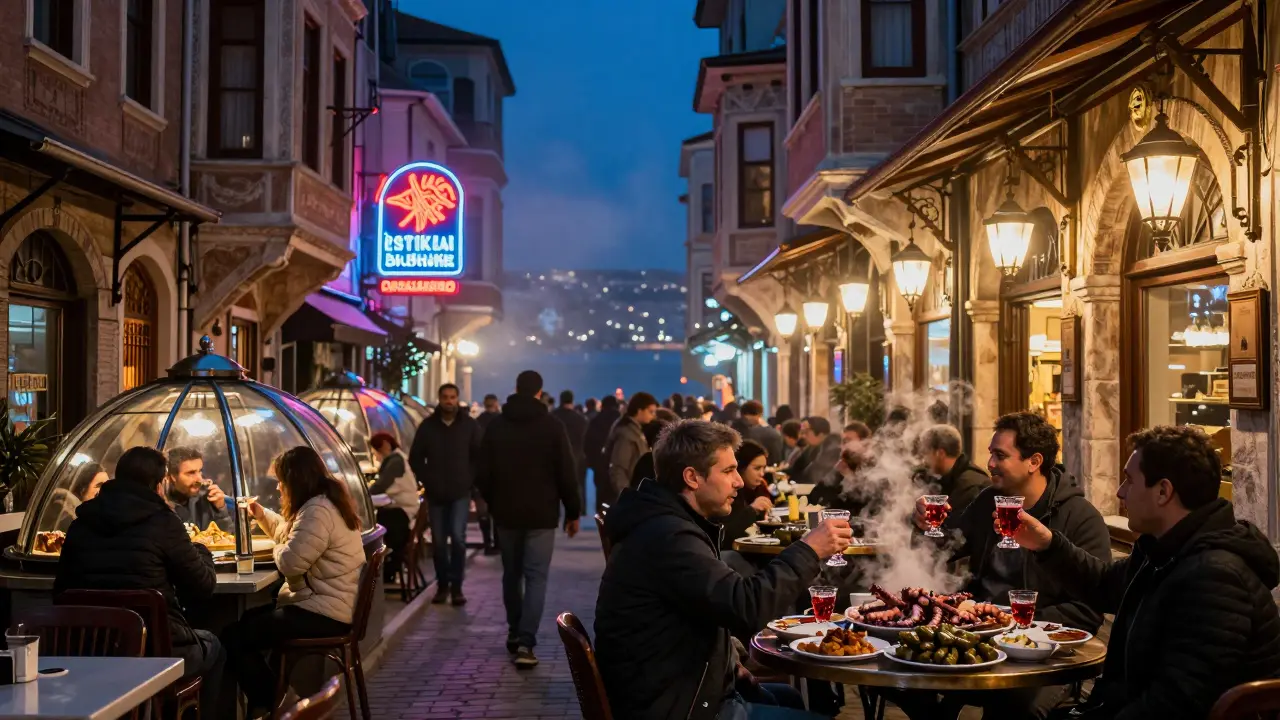
When the sun sets over the Bosphorus, Istanbul doesn’t sleep-it transforms. The city’s nightlife isn’t just about drinking or dancing. It’s a living tapestry woven from centuries of history, cultural collisions, and quiet rebellions. Walk through Beyoğlu after midnight and you’re not just stepping into a bar-you’re walking through layers of Ottoman coffee houses, 19th-century jazz clubs, Soviet-era underground dens, and modern rooftop lounges where DJs spin Turkish pop alongside house beats. This isn’t entertainment. It’s memory in motion.
Where the City Breathes After Dark
Beyoğlu is the heart of Istanbul’s nightlife, but it’s not one place. It’s a chain of alleys, each with its own rhythm. İstiklal Avenue is the neon-lit spine, crowded with tourists and street performers. But turn down Çiçek Pasajı-the Flower Passage-and you enter a quieter world. Here, glass-domed arcades from 1876 house traditional meyhanes where rakı flows like water and mezes arrive in waves: grilled octopus, stuffed grape leaves, spicy lamb meatballs. Locals don’t come here to party. They come to talk. To argue. To remember.
Just a block away, in the narrow streets of Cihangir, you’ll find intimate wine bars like Bar 1919 a boutique wine bar in Cihangir that sources natural wines from Turkey’s lesser-known regions like Thrace and Eastern Anatolia. No loud music. No neon signs. Just oak barrels, soft lighting, and staff who can tell you the soil type of a 2021 Öküzgözü from the Black Sea coast. These places aren’t trying to impress. They’re trying to connect.
The Club Scene: From Underground to Global
If you want beats that shake your ribs, head to Karaköy. This former dockyard district is now Istanbul’s electronic music hub. Clubs like Karga a warehouse-style club in Karaköy known for its minimalist design and underground techno nights and Karma a long-running Istanbul club that blends Middle Eastern rhythms with deep house and has hosted international DJs since 2008 don’t advertise on Instagram. You hear about them from a friend, or you stumble in by accident. Doors open at 1 a.m. and stay open until dawn. No cover charge. No VIP section. Just a crowd of students, artists, and expats dancing like no one’s watching-even though everyone is.
These clubs don’t play Western EDM. They play Turkish techno-tracks that sample bağlama melodies, dervish chants, or the call to prayer slowed down and layered under a 4/4 beat. In 2024, a study by Istanbul University’s Department of Cultural Studies found that 68% of clubgoers under 30 say they attend because they want to hear music that feels like home, not something imported from Berlin or London.
Traditional Mezhanes: The Soul of the Night
Not every night in Istanbul ends with a bass drop. Some end with a glass of rakı and a quiet conversation. In Kadıköy, across the Bosphorus, you’ll find Kanaat Lokantası a family-run meyhane in Kadıköy that has served traditional Turkish mezes and rakı since 1952. The walls are stained with smoke from decades of cigarettes. The waiters know your name by the third visit. The food? Simple. Perfect. Fried zucchini blossoms. Grilled sardines with lemon. A plate of pickled turnips that tastes like winter in a jar.
This is where Istanbul’s elders go. Where poets still write verses on napkins. Where divorcees and retired sailors sit side by side, not speaking, but sharing a bottle. There’s no dress code. No reservation system. You show up, you sit, you order. And if you’re lucky, someone will start singing an old Turkish folk song-just because the mood fits.

The New Wave: Rooftops, Craft Cocktails, and Hidden Speakeasies
On the European side, in the old Pera district, a new kind of nightlife has emerged. Rooftop bars like Mikla a Michelin-starred rooftop restaurant and bar in Beyoğlu that combines Turkish ingredients with Nordic techniques and offers panoramic views of the city and Beyoğlu 1914 a speakeasy-style bar in Beyoğlu that requires a password and serves cocktails inspired by Ottoman-era recipes are changing the game. These aren’t just places to drink. They’re experiences.
Mikla’s cocktail menu includes a drink called "Sultana’s Secret"-a mix of fig-infused gin, black tea syrup, and rosewater, served with a single dried apricot. The bartender explains it’s based on a recipe from the harem kitchens of Topkapı Palace. You don’t just taste it. You feel it.
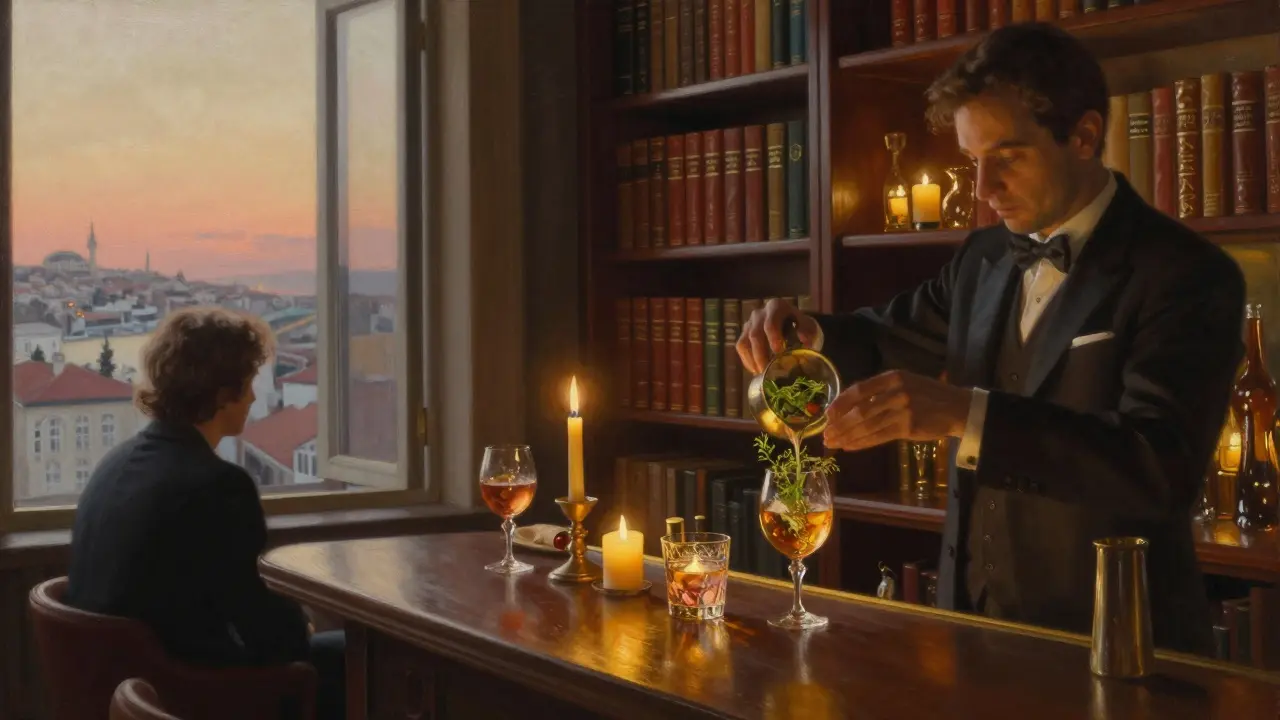
And then there are the hidden bars. Like The Velvet Room a secret cocktail bar in Beyoğlu accessed through a bookshelf in a vintage bookstore. You need a code. You get it from a friend, or you leave your name on a slip of paper at the bookstore downstairs. Inside, the walls are lined with first editions. The music is vinyl-only. The cocktails are made with herbs foraged from the Princes’ Islands. It’s not about being exclusive. It’s about being intentional.
What You Should Know Before You Go
Here’s the truth: Istanbul’s nightlife isn’t dangerous. But it’s not always easy. Police patrols are common in Beyoğlu after 2 a.m., especially near the main squares. Don’t expect to find 24-hour pharmacies or ATMs in every alley. Cash is still king in many meyhanes. Credit cards? Sometimes accepted. Always ask.
Alcohol is legal. But it’s not everywhere. In conservative neighborhoods like Fatih or Üsküdar, you won’t find bars. That’s not a rule-it’s a culture. Respect it. You’re a guest.
And don’t rush. Istanbul’s nightlife doesn’t start at 10 p.m. It starts at midnight. And it doesn’t end until the call to prayer echoes across the hills at 5 a.m. The rhythm is slow. The drinks are strong. The company is better.
Seasons, Events, and When to Go
Winter in Istanbul is quiet. But that’s when the real magic happens. In January, the crowds thin. The clubs get more intimate. The meyhanes feel warmer. The music? Louder.
If you’re visiting in late May, catch the Istanbul Jazz Festival an annual music festival held in Istanbul since 1994, featuring local and international jazz artists in historic venues across the city. Performances happen in converted churches, Ottoman mansions, and open-air courtyards. Tickets sell out fast. But if you’re lucky, you’ll find someone selling a spare at the gate.
Summer? Avoid it unless you like sweating in a crowd. July and August are hot, humid, and packed with tourists. The best time to experience real Istanbul nightlife? October to March. Cool nights. Empty streets. Real people.
What to Bring, What to Leave Behind
Bring cash. Bring a light jacket. Bring curiosity. Leave behind expectations. Don’t expect clubs to open at 10 p.m. Don’t expect bartenders to smile. Don’t expect everyone to speak English. You’ll find English speakers, yes-but the real moments happen when you don’t need words.
And don’t try to "do it all." Istanbul’s nightlife isn’t a checklist. It’s a feeling. One perfect night in a meyhane with a stranger who becomes a friend. One sunrise over the Golden Horn with a glass of raki in your hand. That’s the trip. Not the photos. Not the bars you name-dropped. Just that quiet moment when you realize you’re exactly where you’re meant to be.
Is Istanbul nightlife safe for solo travelers?
Yes, Istanbul’s nightlife is generally safe for solo travelers, especially in well-known areas like Beyoğlu, Karaköy, and Cihangir. Police presence is visible after midnight, and locals are often helpful. Avoid isolated alleys late at night, keep your belongings secure, and trust your instincts. Most incidents involve petty theft or overpriced drinks-not violence.
Do I need to dress a certain way for Istanbul clubs?
Most clubs in Karaköy and Beyoğlu have no strict dress code. Smart casual works fine. Some rooftop bars like Mikla prefer neat attire, but you won’t be turned away for wearing jeans. In traditional meyhanes, comfort matters more than style. Save the flashy outfits for tourist photos-not the dance floor.
Can I find vegan or vegetarian options in Istanbul nightlife spots?
Absolutely. Many meyhanes serve vegan mezes like stuffed eggplant, lentil pilaf, and grilled vegetables. Bars like Karga and Bar 1919 offer plant-based cocktails and snacks. Ask for "vejeteryen" (vegetarian) or "bitkisel" (plant-based)-most staff understand.
What’s the best way to get around Istanbul at night?
The metro and tram run until midnight. After that, taxis and ride-hailing apps like BiTaksi are reliable and affordable. Avoid unmarked cabs. Ferries to Kadıköy stop running around 1 a.m., so plan ahead if you’re crossing the Bosphorus. Walking is safe in central districts, but stick to main streets after dark.
Are there any places I should avoid at night?
Stick to well-lit, populated areas. Avoid the backstreets of Taksim Square after 3 a.m. when crowds thin out. Neighborhoods like Fatih, Üsküdar, and Aksaray have little to no nightlife and aren’t designed for evening exploration. If you’re unsure, ask your hotel or a local. They’ll point you toward the right alley.
How much should I budget for a night out in Istanbul?
You can have a great night for under 150 Turkish Lira ($5 USD). A meyhane meal with rakı and mezes costs about 80-120 TL. A cocktail at a rooftop bar is 120-200 TL. Club entry is usually free, but drinks range from 70-150 TL. Skip the tourist traps on İstiklal-head to side streets for better prices and better vibes.