
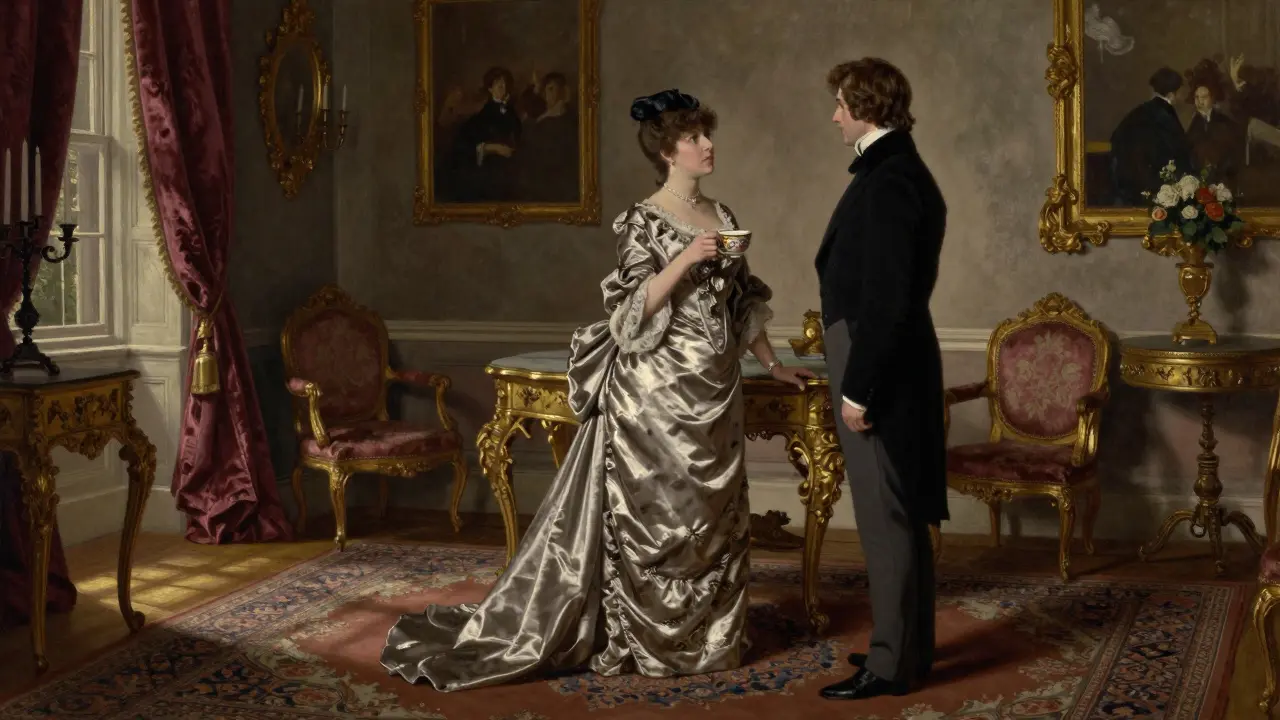
Long before apps like Tinder or OnlyFans, London had its own quiet, shadowy economy of companionship-one shaped by class, law, and changing social norms. The escort industry here didn’t start with glossy websites or Instagram DMs. It began in alleyways, drawing rooms, and back alleys of Georgian and Victorian London, where women (and sometimes men) offered more than conversation. Their roles shifted with the times, but the core demand never disappeared: human connection, discretion, and control over one’s own time and body.
Victorian London: The Rise of the Courtesan
In the 1800s, London’s elite didn’t just hire maids or butlers. They hired women with charm, education, and beauty-not to clean, but to accompany. These women were called courtesans, and they weren’t streetwalkers. Many lived in Mayfair or Belgravia, owned property, and were known by name in aristocratic circles. The most famous, like Lady Caroline Lamb or Cora Pearl, moved between salons and private balls, charging hundreds of pounds (equivalent to tens of thousands today) for an evening. Their clients weren’t just rich men-they were politicians, bankers, and even royalty.
What made them different from prostitutes? It was the package. A courtesan offered conversation, music, dance, and intellectual companionship. She was seen as a status symbol. A man who could afford to keep one was signaling his wealth and refinement. The law didn’t ban her, but it didn’t protect her either. Without marriage, she had no legal rights. If a client disappeared or refused to pay, she had no recourse. Her life was glamorous, but fragile.
Early 20th Century: The Decline and Disguise
After World War I, everything changed. The old aristocracy lost its fortune. Women gained the vote. Social mobility opened up. Courtesans faded out. But the demand didn’t vanish-it just went underground.
By the 1930s and 40s, women working as companions were often called “hostesses” or “ladies for hire.” They appeared at hotels, private clubs, or through word-of-mouth referrals. Some worked out of boarding houses in Soho. Others were linked to brothels but kept their services separate to avoid prosecution. The 1957 Wolfenden Report, which recommended decriminalizing private homosexual acts between adults, indirectly reshaped how society viewed personal relationships. It didn’t legalize escorting, but it made people ask: Why are we policing private behavior?
By the 1970s, the term “escort” started appearing in classified ads. Not in newspapers, but in underground magazines like Men Only or Mayfair. Ads were vague: “Elegant lady for evening companionship. Discreet. References available.” No photos. No addresses. Just phone numbers. You called, spoke briefly, and if you were approved, you got an appointment.
The 1990s: The Phone Call Era
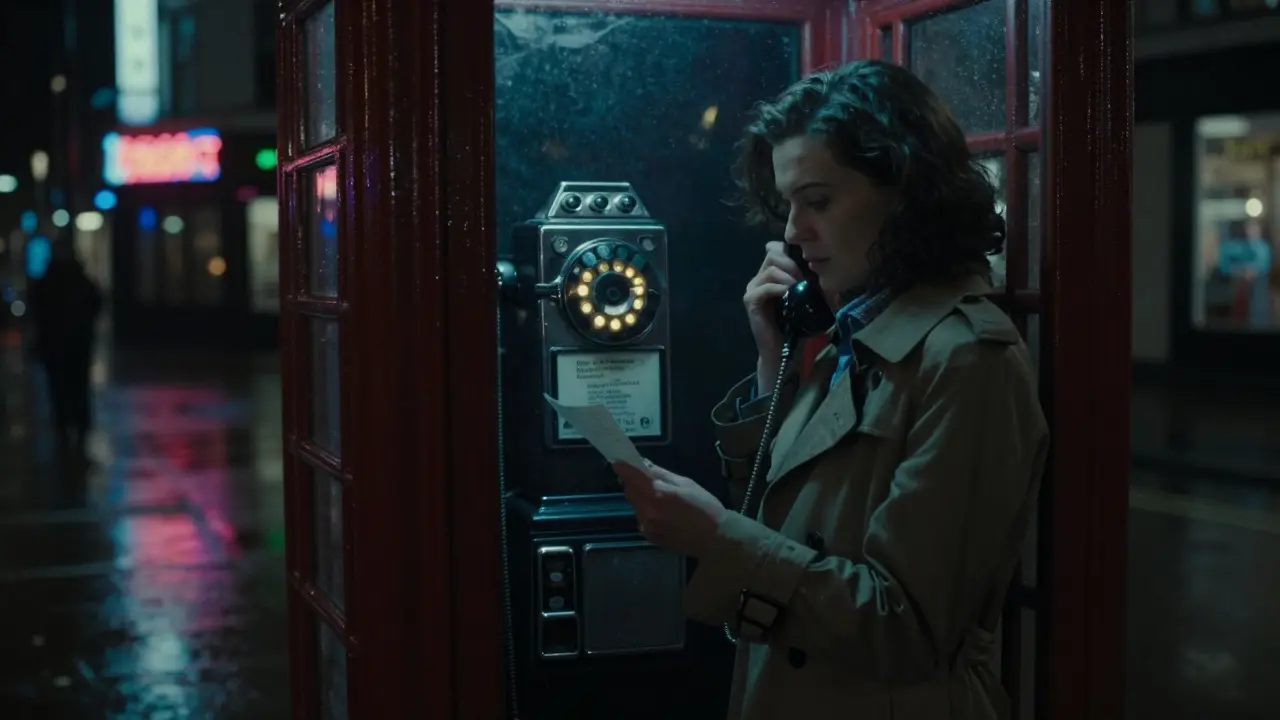
Before smartphones, before Google, there were phone lines. In the 1990s, London’s escort industry operated through a network of answering services. Agencies would take calls 24/7. A client dialed a number, left a message, and waited. The agency screened both parties: the client’s background, the escort’s ID, her availability, and whether she was comfortable with the request.
These agencies weren’t just businesses-they were safety nets. Many escorts refused to work without them. They provided security checks, payment handling, and legal advice. One agency in Knightsbridge reportedly had a lawyer on retainer just to help escorts navigate harassment claims or false accusations. This was the golden age of discretion. No online profiles. No social media. If you were caught, you lost everything.
But the system had flaws. Agencies took 40-60% of earnings. Escorts had little control. Some were pressured into services they didn’t want. Others were trapped by debt or immigration status. The industry was still largely unregulated, but it was more organized than ever before.
2000s-2010s: The Internet Explosion
Then came the internet. And with it, the collapse of the old agency model.
By 2005, websites like EscortList and LondonLadies let escorts create their own profiles. Photos. Rates. Availability. Client reviews. Suddenly, women could bypass agencies entirely. They kept 100% of their earnings. They chose their clients. They set their own boundaries.
But the internet also brought danger. Scammers. Stalkers. Doxxing. A single photo posted online could lead to harassment at work, home, or family. Some escorts began using pseudonyms, burner phones, and encrypted messaging. Others moved to private forums or Telegram groups. The market became flooded. Competition rose. Prices dropped. What used to cost £300 an hour now sometimes went for £100.
At the same time, London’s legal landscape tightened. The 2003 Policing and Crime Act made soliciting illegal. The 2015 Modern Slavery Act blurred the line between coercion and consent. Police started targeting websites more aggressively. In 2018, the UK government passed a law making it illegal to pay for sex with someone who was “controlled” by another person. The law didn’t criminalize the escort-but it made clients nervous. Many stopped looking.
2020s: The New Normal
Today, the London escort industry is quieter but more diverse. It’s no longer dominated by one model. You’ll find:
- High-end independent escorts who work through private websites and vet clients with background checks
- Student companions who offer dinner dates or museum tours for £80-£150, often to pay rent
- Male and non-binary escorts who serve LGBTQ+ clients and older professionals seeking emotional connection
- Virtual companions who offer video calls, voice chats, or letter-writing services-no physical contact needed
Platforms like OnlyFans and Patreon have become alternatives. A woman who once charged £500 for an evening now might earn £2,000 a month from subscribers who pay for access to her thoughts, her music, or her company-not her body.
Legal gray areas remain. It’s legal to be an escort. It’s legal to pay for companionship. But it’s illegal to run a brothel, to solicit on the street, or to control someone else’s work. Police still raid websites. Banks freeze accounts. Credit card processors refuse transactions. Escorts operate like freelancers in a hostile economy.

What Hasn’t Changed
Despite all the changes, one thing remains constant: the demand for companionship that isn’t transactional, but isn’t romantic either. People in London-whether stressed executives, lonely retirees, or young people feeling disconnected-still want someone who listens without judgment, who shows up on time, and who leaves without drama.
The escort industry in London has never been about sex. Not really. It’s been about control. Control over loneliness. Control over time. Control over who you let into your life. And for many, it still is.
How It Compares to Other Cities
London’s escort scene is different from Paris, New York, or Tokyo. In Paris, the tradition of the demoiselle still lingers-women who offer intellectual companionship with a cultural flair. In New York, it’s more corporate: high-pressure rates, aggressive marketing, and a heavy focus on luxury. In Tokyo, it’s about ritual: tea ceremonies, silence, and emotional distance.
London’s edge? It’s the blend of old-world discretion and modern tech. You can find a woman who quotes Shakespeare and texts you in emoji. Who charges £1,200 for a weekend in the Cotswolds but won’t accept cash. Who has a PhD in art history and a side hustle in podcasting.
There’s no single profile anymore. That’s the real evolution.
Is it legal to be an escort in London today?
Yes, it’s legal to offer companionship services in London, as long as you’re not running a brothel, soliciting on the street, or controlling someone else’s work. Paying for sex isn’t illegal either-but if the person is being exploited, both parties can face charges under the Modern Slavery Act. The law targets coercion, not consensual adult work.
Why do people use escort services in London?
People use escort services for many reasons: loneliness, stress, lack of social skills, or simply wanting to be with someone who doesn’t judge them. Some want emotional support. Others want to feel desired. Many clients are middle-aged professionals who feel disconnected from dating apps or traditional relationships. It’s not always about sex-it’s about being seen.
How do modern escorts stay safe in London?
Today’s escorts use a mix of tech and tradition. They screen clients with ID checks, use encrypted apps like Signal, avoid public meeting spots, and always tell a trusted friend where they’re going. Many work through private websites that require verification. Some have security apps that alert authorities if they don’t check in. A few even hire private drivers for transport. Safety is non-negotiable.
Are there male escorts in London?
Yes, and their numbers have grown since 2015. Male escorts serve women, LGBTQ+ clients, and older men seeking companionship. Many specialize in emotional support, gym sessions, or cultural outings. Some work with dating coaches or therapy groups. Their services are often priced lower than female escorts-not because they’re less valuable, but because the market is less saturated.
What’s the future of the escort industry in London?
The future is hybrid. Expect more virtual services, regulated platforms, and peer-led collectives that offer legal support and mental health resources. As society becomes more accepting of diverse relationships, the stigma will fade-but only if workers organize. The next big shift won’t be tech-driven. It’ll be human-driven: escorts demanding rights, not just clients.