
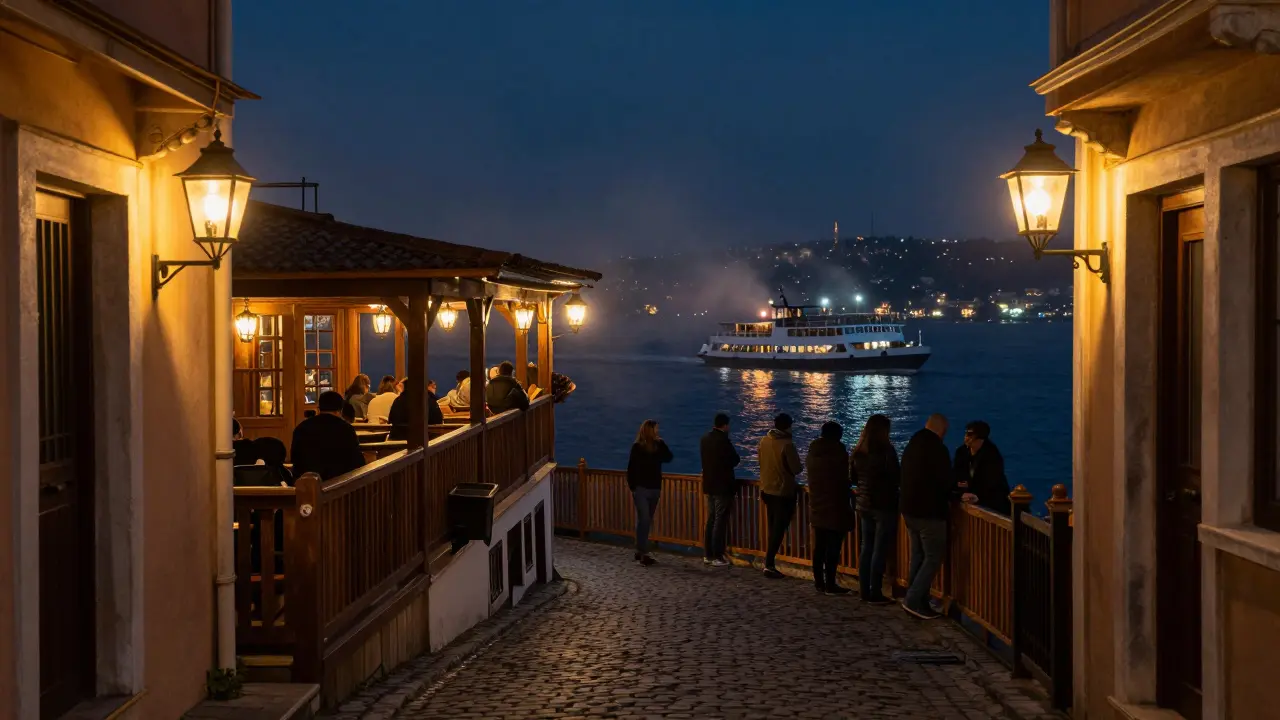
When the sun sets over the Bosphorus, Istanbul doesn’t sleep - it transforms. While tourists pack up and head back to their hotels, locals and seasoned travelers slip into a world where music spills from hidden courtyards, mezze plates never run out, and the city’s ancient stones hum with modern rhythm. This isn’t just a party scene. It’s a cultural pulse, alive after dark, and if you’re a night owl, Istanbul is one of the few places on Earth that makes you feel like you’ve stumbled into a secret only the city knows.
Where the City Comes Alive After Midnight
Istanbul’s nightlife isn’t clustered in one district - it’s scattered like stars across the skyline. Each neighborhood has its own rhythm. In İstiklal Caddesi, the main artery of Beyoğlu, you’ll find neon-lit jazz clubs next to underground techno dens. A 10-minute walk down Çiçek Pasajı (Flower Passage), and you’re stepping into a 19th-century arcade turned bar crawl, where every corner has a different vibe: Turkish whiskey at Bar 61, live bağlama at Asitane, or a cocktail with a view of the Galata Tower at 360 Istanbul.
But if you want to feel the real heartbeat of Istanbul after midnight, head to Karaköy. This former dockside district is now the epicenter of cool. Bars here don’t open at 9 p.m. - they ignite at 1 a.m. Karaköy Güverte is a rooftop bar built on an old warehouse, with wooden decks, hanging lanterns, and a sound system that plays everything from Turkish house to rare 90s hip-hop. It’s not loud. It’s immersive. You’ll find artists, musicians, and travelers all leaning over the railing, watching the ferries glide across the Bosphorus like silent ghosts.
The Art of the Late-Night Mezze
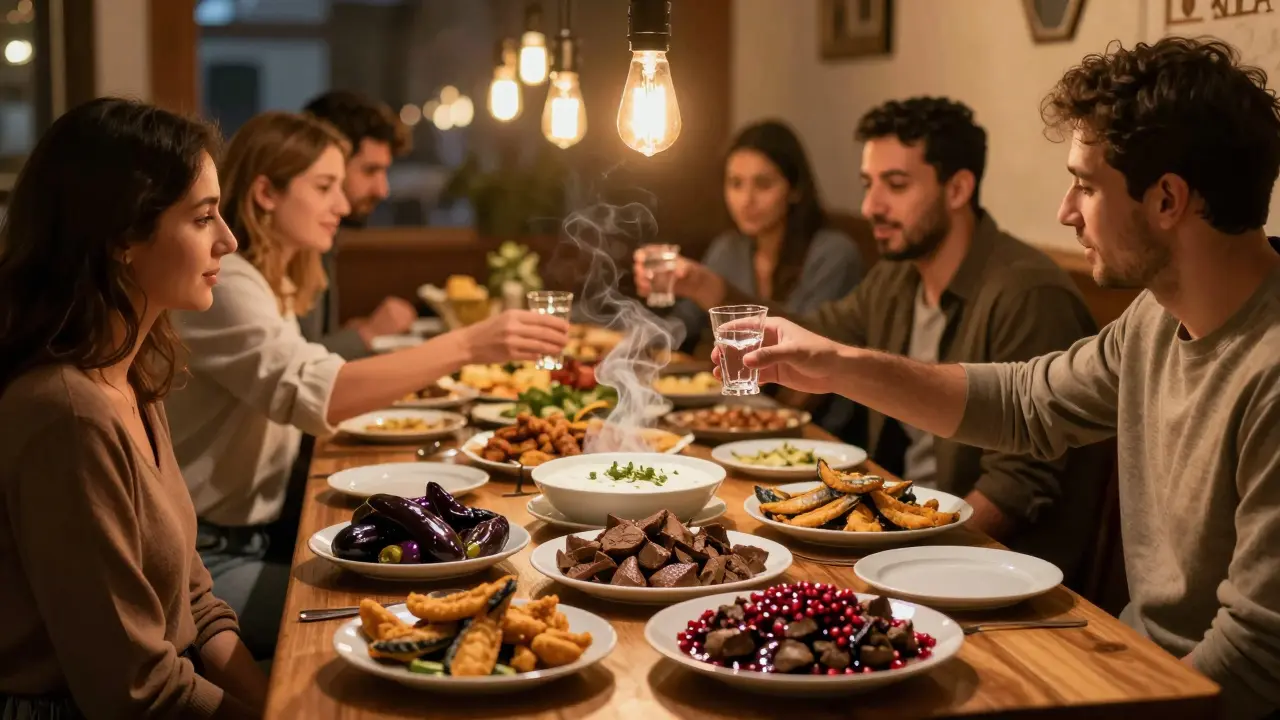
Istanbul’s nightlife isn’t just about drinks. It’s about food that lingers. Unlike other cities where bars serve pretzel bites and nachos, here, the bar menu is an extension of the kitchen. At Leb-i Derya in Beşiktaş, you’ll be handed a plate of haydari (yogurt with dill and garlic), smoked eggplant, and crispy fried mackerel - all at 2 a.m. The owner, a retired fisherman turned host, will sit with you and tell you why the anchovies from Sinop taste better after midnight.
Don’t miss Çiya Sofrası in Kadıköy, open until 3 a.m. on weekends. It’s not a bar. It’s a kitchen that doubles as a social hub. Locals come here to eat, drink raki, and argue about football. The menu changes daily based on what the market delivered. One night, it’s stuffed quince; another, it’s lamb liver with pomegranate molasses. No one orders from a menu. You just say, “Surprise me.” And they do.
Rooftop Magic and Bosphorus Views
If you’ve ever dreamed of sipping a cocktail with the lights of Asia on one side and Europe on the other, Istanbul delivers. Asmalı Mescit on the European side has one of the most intimate rooftop terraces - just 12 tables, no reservations, and a view that makes you forget you’re in a city of 15 million. The bartender, Ayşe, has been pouring çay and gin cocktails here for 18 years. She’ll tell you the best time to arrive: 11:30 p.m. That’s when the city lights flicker on, and the call to prayer from the Süleymaniye Mosque blends with the bassline from the speaker next door.
For something more extravagant, Karaköy Life on the 17th floor of a glass tower offers a panoramic sweep of the Golden Horn. The cocktails here are named after Ottoman poets. The “Nedim” is made with rosewater gin, black sesame syrup, and a single edible gold leaf. It costs 280 Turkish lira - but it’s not about the price. It’s about the moment. Watching the sunrise from this rooftop, with a cold drink in hand and the call to prayer echoing across the water, is something you’ll carry long after you leave.
Hidden Clubs and Underground Beats
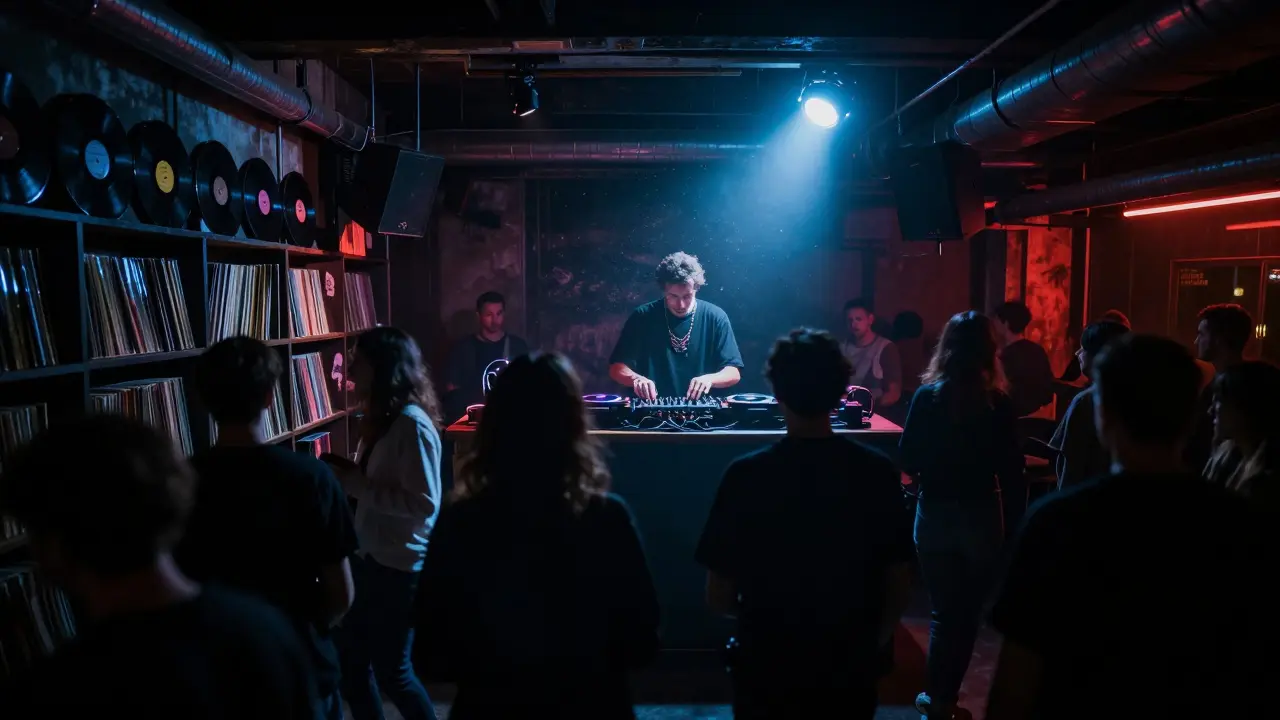
Istanbul’s club scene is underground by necessity. The city has strict noise laws, and venues often operate in converted warehouses, basements, or even old bathhouses. The most talked-about spot is Barbican in Beyoğlu. You need a password to get in. It’s not secret - you just ask the bartender at Bar 61 for it. Inside, the walls are lined with vintage Turkish vinyl, and the DJ plays a mix of Anatolian folktronica, Berlin techno, and rare 70s Turkish pop. No one dances in rows. Everyone moves like they’re alone - until the bass drops, and suddenly, you’re part of a wave.
On weekends, Yeni Sahne in Nişantaşı turns into a live music haven. It’s not a club. It’s a theater that turns into a concert hall after 11 p.m. You’ll hear everything from Kurdish folk singers to experimental noise bands. The crowd is young, quiet, and intensely focused. No phones. No photos. Just sound.
When the City Doesn’t Let Go
Most cities shut down by 3 a.m. Istanbul? It’s just getting started. The last trains leave around 1 a.m., but that doesn’t matter. You’ll find people walking along the water, sipping tea from paper cups, or sitting on the steps of the Galata Bridge, watching fishermen haul in their night catch. The city doesn’t care if you’re a tourist or a local. If you’re awake, you belong.
There’s a reason Istanbul’s nightlife lasts until dawn. It’s not about escape. It’s about connection. In a city that straddles two continents, two religions, two worlds, the night is the only time everything feels whole. You don’t need to speak Turkish. You just need to sit down, order a glass of raki with water on the side, and let the city speak.
What to Bring - And What to Leave Behind
- Wear comfortable shoes - you’ll walk 10 kilometers before sunrise.
- Bring cash. Many places don’t take cards after midnight.
- Don’t expect to find American-style clubs. Istanbul’s nightlife is slow, intimate, and deeply personal.
- Leave your judgment at the door. What feels chaotic to you feels alive to them.
- Don’t rush. The best moments happen when you’re not looking for them.
And if you’re wondering what to do after the sun comes up? Head to Çukurcuma, the antique district. Find a café with a view of the hills. Order a Turkish coffee. Sit. Listen. The city’s night has left its mark - in the laughter, the music, the quiet moments between strangers who became friends for one night.
Is Istanbul nightlife safe for solo travelers?
Yes, Istanbul’s nightlife is generally safe for solo travelers, especially in popular areas like Beyoğlu, Karaköy, and Nişantaşı. The streets are well-lit, police presence is visible, and locals are used to tourists. Avoid isolated alleys after 3 a.m., and don’t carry large amounts of cash. Most bars and clubs have security, and drivers from ride-sharing apps like BiTaksi are reliable. Trust your gut - if a place feels off, leave.
What’s the best night to go out in Istanbul?
Friday and Saturday nights are the busiest, but they’re also the most authentic. Locals take weekends seriously - you’ll see families out for dinner, friends dancing in hidden courtyards, and street musicians playing for tips. If you want fewer crowds and more authentic vibes, try Thursday. Many clubs host experimental sets or live jazz nights on Thursdays, and the energy is more relaxed.
Do I need to dress up for Istanbul nightlife?
No. Istanbul’s nightlife is stylish but not formal. In rooftop bars and upscale spots like Karaköy Life, smart casual works - a nice shirt, clean jeans, closed shoes. In underground clubs like Barbican or Yeni Sahne, you’ll see hoodies, boots, and even ripped jeans. No one checks your outfit. What matters is that you’re present. Skip the flashy logos and over-the-top accessories - locals value authenticity over status.
Are there any cultural rules I should know?
Yes. While Istanbul is liberal, it’s still part of a Muslim-majority country. Public displays of affection are rare - hold hands, yes, but avoid kissing in public. Don’t drink alcohol on the street - it’s legal in bars, but not on sidewalks. Also, if you’re invited to someone’s home for tea or raki, it’s polite to accept at least one glass. Refusing can seem rude. And never raise your voice in a bar - Turks value calm conversation over loud noise.
Can I find English-speaking staff in Istanbul bars?
In tourist-heavy areas like Beyoğlu and Karaköy, yes - most bartenders and servers speak at least basic English. But in local spots like Çiya Sofrası or smaller jazz bars in Kadıköy, English is rare. That’s part of the charm. Learn a few Turkish phrases: “Teşekkür ederim” (thank you), “Bir şey istemiyorum” (I don’t want anything), and “Bu ne?” (What’s this?). Locals appreciate the effort. And if you’re stuck? Point. Smile. A glass of raki is a universal language.
What time do places actually close?
Bars close between 2 a.m. and 4 a.m., depending on the neighborhood. Clubs often stay open until 5 a.m., especially on weekends. Some rooftop bars like Asmalı Mescit don’t officially close - they just dim the lights and keep serving tea until sunrise. The last ferries leave around 1 a.m., so plan your return. But if you’re still awake at 6 a.m., head to the fish market in Kadıköy. That’s where the night truly ends - with fresh seafood, strong coffee, and people who’ve been awake longer than you.
Next Steps: Where to Go After This
If you loved Istanbul’s night, you’ll want to explore its daytime soul. Visit the Grand Bazaar before noon - it’s quiet then, and the scent of saffron and rosewater lingers in the air. Walk the walls of the old city at sunrise. Or take a ferry to Princes’ Islands - no cars, just bicycles and silence. Istanbul doesn’t sleep. But it does change. And if you let it, it’ll show you a side of itself you didn’t know you were looking for.